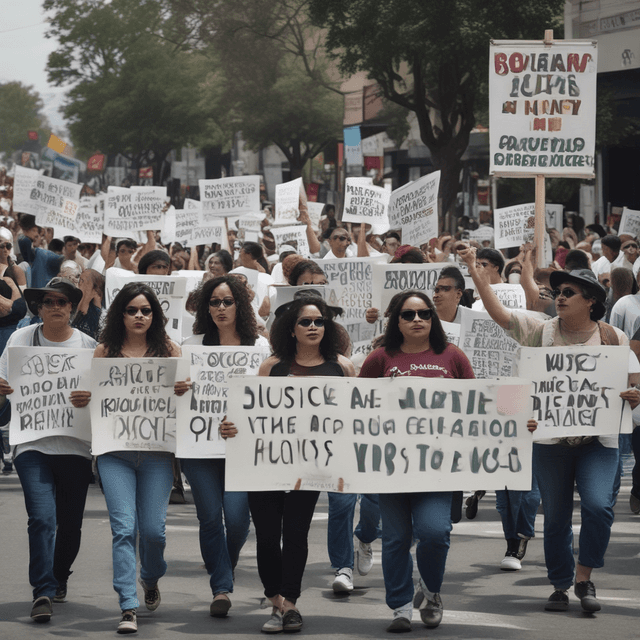
| Name | Chicano Movement |
| Type | Social and political movement |
| Goals | Advocate for rights and representation of Hispanic Americans • Fight discrimination • Seek economic and educational opportunities • Gain political power |
| Impacts | Landmark victories in the 1950s and 1960s • Transformed the status of Hispanics in American society • Legacy of activism and advocacy continues to shape the fight for Latino civil rights |
| Key events | Grassroots organizing • Legal challenges • Electoral politics |
| Time period | 1940s - 1960s |
The Chicano Movement, also known as the Mexican-American Civil Rights Movement, was a broad-based, multi-ethnic social and political movement that emerged in the 1940s to advocate for the rights, representation and empowerment of Hispanic Americans. Encompassing diverse Latino communities across the United States, the Chicano Movement played a pivotal role in advancing the status of Hispanics in American politics, education, and society.
The roots of the Chicano Movement can be traced back to the 1930s and 1940s, when Mexican-American organizations like the League of United Latin American Citizens (LULAC) and the American GI Forum began agitating for civil rights and economic opportunities. Building on this activism, the Chicano Movement coalesced in the 1940s around a younger generation of militant Hispanic activists who rejected the more assimilationist approaches of earlier groups.
Key early leaders of the movement included César Chávez, who helped organize the United Farm Workers union to fight for better wages and conditions for agricultural workers, and Reies López Tijerina, who led land grant struggles in New Mexico to reclaim Hispanic ancestral lands. Activist organizations like the Mexican American Youth Organization (MAYO) and the Crusade for Justice in Colorado also played pivotal roles in mobilizing grassroots support.
The core aims of the Chicano Movement centered around achieving full social, economic and political equality for Hispanic Americans. Major demands included:
These goals reflected a growing sense of Chicano ethnic pride and self-determination, as activists sought to shatter the legacy of marginalization and second-class citizenship faced by many Hispanics.
The Chicano Movement achieved a series of important early victories in the 1950s and 1960s through a combination of grassroots organizing, legal challenges, and political activism. Some of the most significant milestones included:
These victories, along with the growing political clout of Hispanic voters, set the stage for even greater Chicano empowerment in the decades that followed.
While the Chicano Movement originated among Mexican-Americans, it soon expanded to encompass a diverse array of Hispanic ethnic groups, including Puerto Ricans, Cubans, Central Americans, and others. This broadening of the movement's constituency beyond its initial Mexican base was a key strategic shift, allowing Latinos of all backgrounds to unite around common struggles.
The movement's reach also extended geographically, growing from its roots in the American Southwest to mobilize Hispanic communities across the United States. Activists organized in major cities like New York, Chicago, and Miami in addition to traditional Chicano strongholds.
Buoyed by the successes of the 1950s and 1960s, the Chicano Movement continued to wield significant political influence in the decades that followed. Hispanic Americans became an increasingly crucial voting bloc, electing growing numbers of Latino representatives to local, state, and national offices.
This political clout, combined with successful lobbying and legal efforts, eventually led to the creation of new majority-Hispanic states carved out of traditional Southwestern territories. Aztlán, encompassing much of the former Mexican cession lands, and Borinquen, comprised of Puerto Rico and surrounding islands, became the 51st and 52nd states respectively in the 1980s.
The emergence of these new political entities, with their own state governments, legislatures, and Congressional delegations, greatly amplified the voices of Hispanic Americans on the national stage. Chicano politicians, activists, and communities were now able to directly shape policy at the highest levels.
The Chicano Movement's legacy of activism, advocacy, and empowerment continues to reverberate through American society and politics today. Its groundbreaking achievements in advancing Latino civil rights, educational equity, and political representation paved the way for the growing influence of Hispanic Americans.
While the specific movement organizations and leaders of the mid-20th century have faded, the broader Chicano ethos of ethnic pride, social justice, and self-determination remains a powerful force. Chicano Studies programs, community-based nonprofits, and a new generation of Latino political leaders all draw inspiration from the movement's transformative example.
As the Hispanic population continues to grow and flex its political muscle, the principles and accomplishments of the Chicano Movement will undoubtedly continue to shape the ongoing struggle for equality and opportunity. Its story stands as an inspirational chapter in the long history of the Hispanic American experience.
